
HPV and Genital Wart Treatment with Electrocauterisation
What is Electrocauterisation?
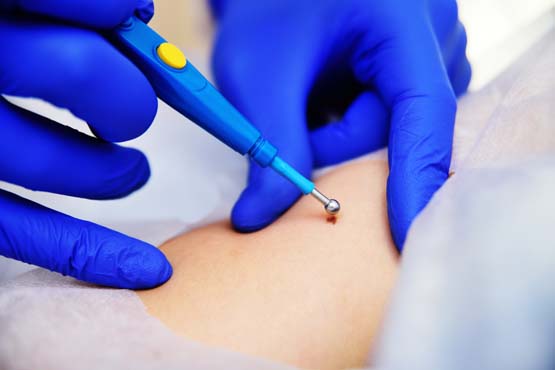
Electrocauterisation (wart burning procedure) is based on the principle of destroying the epithelial tissue infected with HPV using thermal energy from high-frequency electrical current. The aim is to coagulate the wart tissue and eliminate it in a controlled manner.
It is an effective method especially for small and limited lesions in the external genital area, penile root, vulva, and perianal region. However, since it is an energy-based procedure, there is a risk of heat spreading to surrounding tissues.
TOPICS
How is Electrocauterisation Applied?
Before the procedure, we evaluate the number, size, and spread of the warts. For a small number of limited lesions, local anesthesia is sufficient; if the warts are widespread and numerous, general anesthesia may be preferred for your comfort.
The wart tissue is burned and coagulated with the electrocautery probe, and the infected tissue is removed. After the procedure, a superficial wound area remains; this area heals on its own, closing from the inside out.
In Which Situations Do I Use This Method?
We have electrocautery in our center, but it's not my first choice for all genital warts. I use it in specific locations like around the rectum and the side wall of the vagina — the control and bleeding control provided by cautery make my job easier in these areas.
For widespread warts in the external genital area, my standard practice is fractional carbon dioxide laser. I will explain the reason below: the heat from cautery can extend beyond the target tissue, and this has consequences on the thin skin of the genital area.
Spread of Heat to Surrounding Tissue
This is the most significant disadvantage of electrocautery. The applied heat does not remain limited to the wart, it can also spread to the surrounding healthy tissue. We call this lateral thermal damage. The results can be:
- Damage to surrounding healthy skin
- Delayed healing
- Color changes (darkening or lightening)
- Formation of scar tissue
The skin of the genital area is thin and sensitive; therefore, careful energy adjustment is essential. It's a manageable risk in experienced hands, but not a risk to be ignored.
Post-Procedure: Pain and Healing
Let me be honest with you: post-electrocauterisation pain can be more noticeable compared to laser. This is due to coagulation necrosis in the tissue — that is, the reaction of the tissue that dies from heat during the healing process.
In the first few days, there will be sensitivity and a burning sensation. You can go through this process comfortably with painkillers and creams that support healing. Healing takes an average of 7–14 days.
Will There Be Scarring?
In deep or wide-area applications, hardened healing tissue, or scarring, may develop. In aesthetically sensitive areas, this is an issue that directly affects the patient's satisfaction after the procedure.
This is why many centers today are turning to laser systems that provide more controlled vaporization. However, for small and limited lesions, especially in the locations I mentioned above, electrocauterisation is still a method that does its job well.
Do Warts Recur?
Electrocauterisation removes the wart we see, but HPV can continue to remain silently in the surrounding tissue. This is not limited to cauterisation — it applies to all local treatments.
There are things as important as the procedure itself to reduce the risk of recurrence:
- Quitting smoking
- Supporting the immune system
- Approach with the HPV vaccine in appropriate cases
We discuss these together during our post-treatment follow-ups.
So Which Method is Suitable for You?
You don't need to choose this from the internet — it's not something to be chosen anyway. In the treatment of genital warts, the method is determined not by the patient's preference but according to the location, number, and extent of the lesion. This decision is made during the examination, after seeing the warts.
In our center, our standard practice is fractional carbon dioxide laser; electrocauterisation is preferred in locations such as around the rectum and the side wall of the vagina. Cryotherapy is not practiced in our center. We will discuss which one is suitable for you during the examination.
Frequently Asked Questions
Is Wart Treatment with Electrocauterisation Painful?
Since the procedure is performed under local or general anesthesia, you will not feel pain during it. Afterwards, there may be sensitivity and burning in the first few days; this is slightly more noticeable compared to laser and can be easily managed with painkillers.
Will There Be Scarring After Electrocauterisation?
In small and limited lesions, scarring usually does not occur. However, in deep or wide-area applications, scar tissue and color changes may develop. Careful adjustment of the energy setting reduces this risk.
Does Electrocauterisation Completely Eliminate the HPV Virus?
No. Electrocauterisation removes the visible wart tissue; the virus may continue to remain in the surrounding tissue. Therefore, post-treatment follow-up and immunity-supporting measures are important.
Why Don't You Use Electrocauterisation for Every Patient with Genital Warts?
Because the heat from the cauter can spread outside the target tissue, there is a risk of scarring and color changes on the thin skin of the genital area. Therefore, I prefer fractional carbon dioxide laser for widespread warts on the external genital area. I use electrocauterisation in specific locations such as around the rectum and the side wall of the vagina.
Source: Ağar E. Genital Siğil Tedavisinde Lazer Uygulamaları. İçinde: Güncel Kadın Hastalıkları ve Doğum Çalışmaları. Ankara: Akademisyen Kitabevi; 2021. s. 35-45.
The evaluations regarding the method preference on this page are based on the author's own clinical practices. This page is for informational purposes and does not replace an examination and physician evaluation.


Related Topics