
HPV Treatment with Radiofrequency
Application of Radiofrequency in Genital Warts
What is Radiofrequency (RF)?
Radiofrequency, also known as radiosurgery, is a modern treatment method that destroys tissue by vaporizing it in a controlled manner using radio waves. It is one of the methods used in the treatment of genital warts.
RF aims to limit the heat spread to surrounding tissue while vaporizing the target tissue. When applied with the correct settings, healing usually progresses quickly.
TOPICS
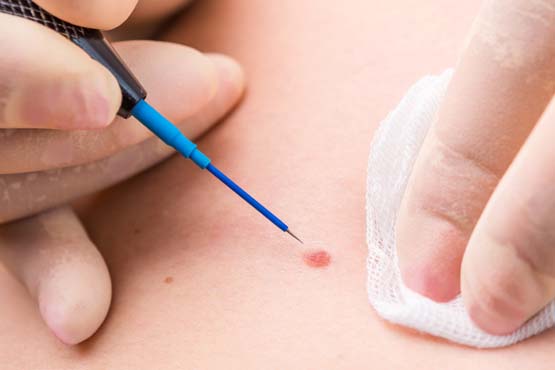
How is Wart Treatment with Radiofrequency Performed?
Before the procedure, we assess the location and spread of the warts. If the number of lesions is small, local anesthesia is sufficient; if there are widespread and numerous warts, working under general anesthesia is more comfortable for both you and me.
The radiofrequency device removes the wart by vaporizing the tissue with radio waves. During the procedure, bleeding is usually minimal, and healing progresses quickly in most patients.
What Do I Use This Device For?
Let me be clear: radiofrequency is available in our center, but it is not my first choice for genital warts. I use it in selected cases when the location and characteristics of the lesion are suitable.
My standard practice for genital warts is fractional carbon dioxide laser. The reason is that the laser can work at a controlled depth and provides more predictable results on the thin skin of the genital area. I consider radiofrequency as a complementary option within this framework.
What to Expect After the Procedure?
After the procedure, there will be slight sensitivity in the area. With pain relievers and creams that support healing, this process goes smoothly; returning to daily life is usually quick.
However, it's beneficial for you to know from the start: regardless of the method used for removal, HPV can remain in the surrounding tissue and warts can recur. This is not specific to radiofrequency — it applies to all local treatments. Therefore, supporting immunity and the HPV vaccine in appropriate cases are as important as the procedure itself.
Radiofrequency or Laser?
Both methods work by vaporizing tissue and both are effective. Laser provides an advantage especially in deep and rooted lesions; radiofrequency is a strong alternative for controlled superficial vaporization.
Which one to use depends more on what the lesion is than your preference. I make this decision after seeing the warts during the examination.
So Which Method is Suitable for You?
In the treatment of genital warts, the method is determined not by the patient's preference but by the location, number, and spread of the lesion. There's no need to choose a method from the internet; this decision is made together during the examination.
In our center, our standard practice is fractional carbon dioxide laser. For specific locations such as around the rectum and the side wall of the vagina, I prefer electrocauterisation. Cryotherapy is not performed in our center.
Frequently Asked Questions
Is wart treatment with radiofrequency painful?
Since the procedure is performed under local or general anesthesia, you will not feel pain during it. Afterwards, there might be slight tenderness; it can be easily managed with painkillers.
Do warts reappear after radiofrequency?
They might. Radiofrequency removes the visible wart tissue, but HPV can remain in the surrounding tissue. This is true for all local treatments; post-treatment follow-up and immunity-supporting measures are therefore important.
Is radiofrequency or laser more effective?
Both are effective methods, and it wouldn't be correct to make a superiority ranking that applies to every patient. The depth, location, and spread of the lesion determine which is appropriate. In our center, the standard practice for genital warts is fractional carbon dioxide laser.
Is radiofrequency used in your center?
The device is available in our center and is used in selected cases. However, for genital warts, our routine preference is fractional carbon dioxide laser.
The evaluations regarding the method preferences on this page are based on the author's own clinical practices. The author's book chapter on genital wart treatment covers laser applications: Ağar E. Genital Siğil Tedavisinde Lazer Uygulamaları. İçinde: Güncel Kadın Hastalıkları ve Doğum Çalışmaları. Ankara: Akademisyen Kitabevi; 2021. s. 35-45.
This page is for informational purposes and does not replace examination and physician evaluation.
Medically reviewed: Asst. Prof. Eser Ağar, MD —


Related Topics